Turning a £100k Loss into Break Even
Rebuilding Food & Beverage at Burton-on-Trent Golf Club
When I first began working with Burton-on-Trent Golf Club, its Food & Beverage operation had just made a loss of approximately £100,000.
The immediate temptation with a struggling hospitality operation is to look for one big problem.
There wasn't one.
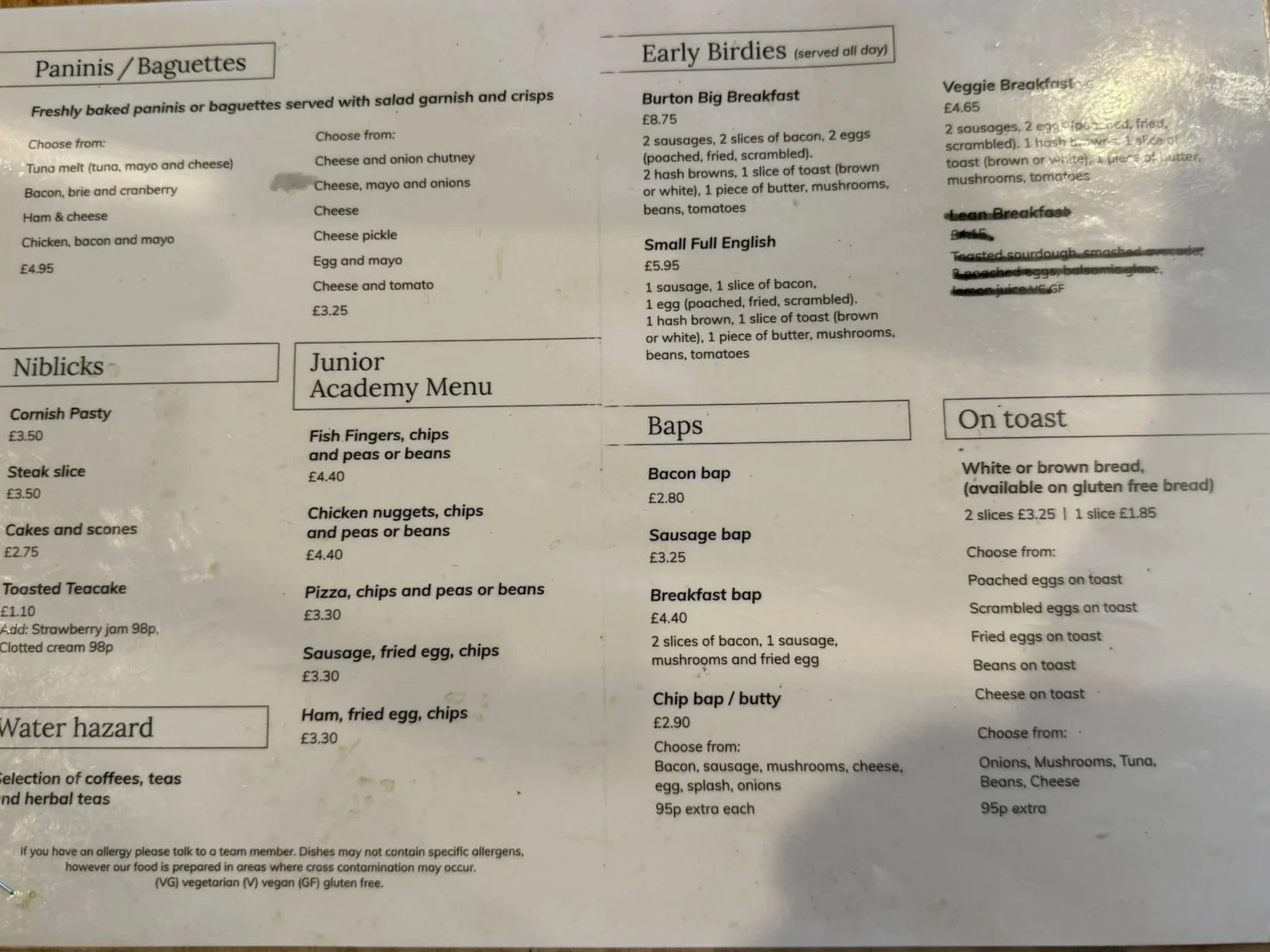
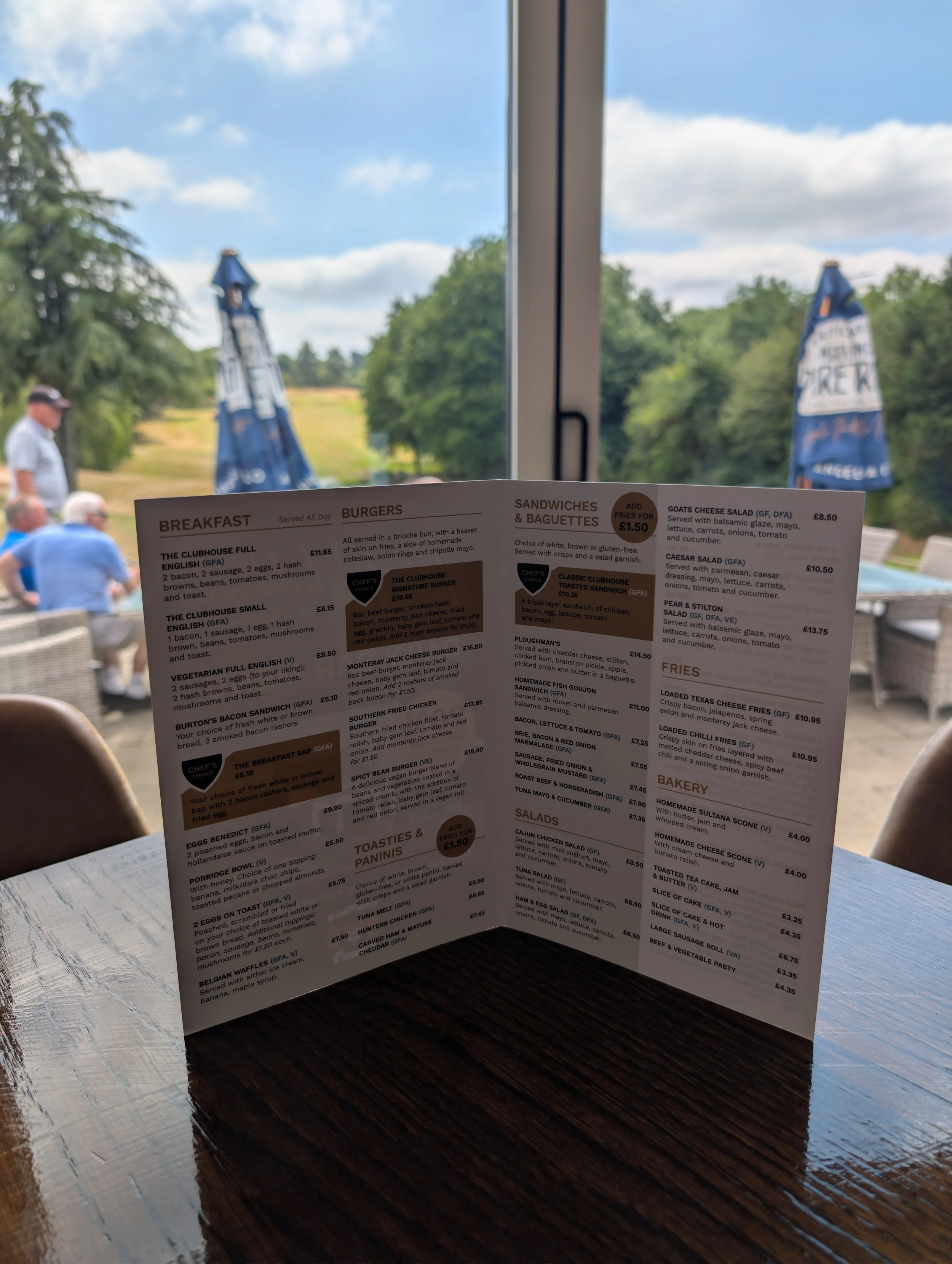
A £2.80 bacon roll was one of the first things that caught my attention, but the menu was really just a symptom of something much bigger.
Kitchen wage costs were unsustainable. Opening hours weren't aligned to customer demand. Menu prices hadn't kept pace with costs. There was limited ownership of GP, purchasing or stock control. Events weren't always being communicated or accounted for correctly. And the financial reporting made it difficult for management and the Board to understand what was really happening.
The operation didn't need one fix. It needed a reset.
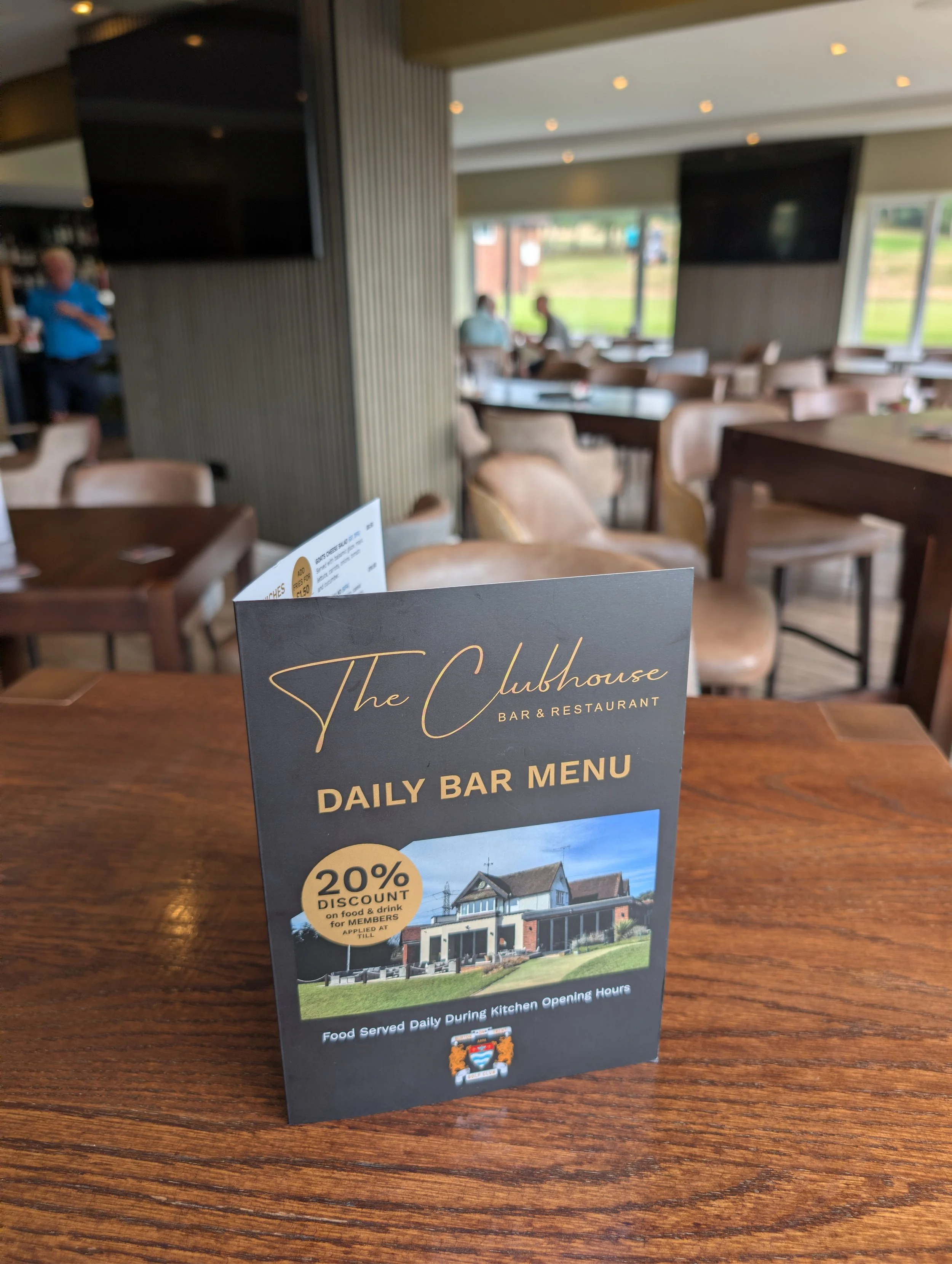
From old…to new, correctly priced and attractive menus
Fixing The Foundations
We started with the data.
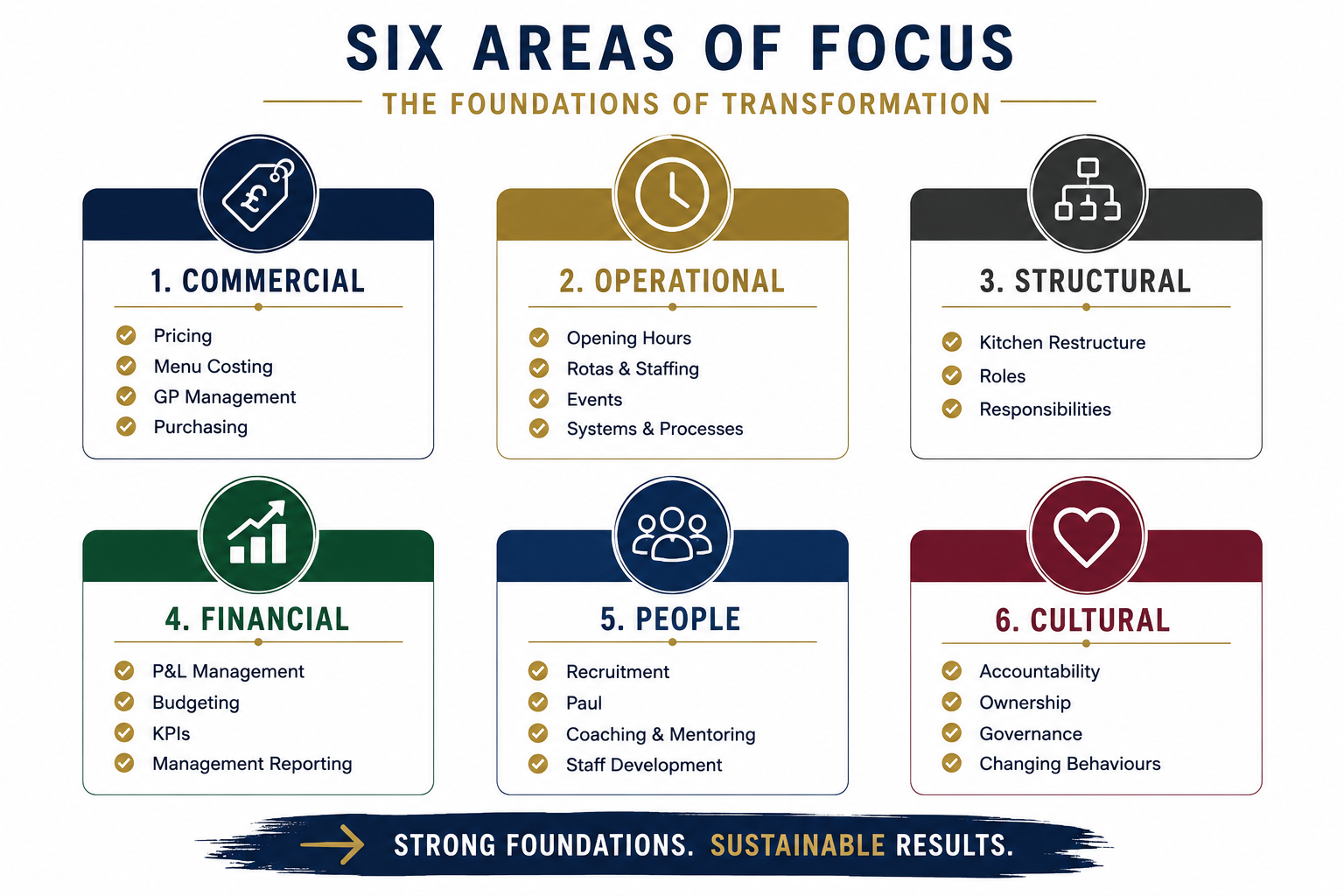
Three years of EPOS transactions were analysed to understand when customers were actually spending money. Kitchen opening hours and staffing could then be rebuilt around genuine demand rather than historic practice.
The kitchen structure was simplified. Roles and responsibilities were clarified. Every menu item was reviewed and costed, food and bar pricing was brought back to commercially sustainable levels, and realistic GP and wage targets were introduced.
Financial reporting was reviewed, a new operational budget was built and meaningful KPIs were introduced so management could understand performance and take action.
Event booking and communication processes were rebuilt, clearer operational standards introduced and greater accountability placed around purchasing, staffing and day-to-day decision making.
Building The Management
One of the most important changes wasn't financial at all.
I took responsibility for the recruitment process for a new Food & Beverage Manager, helping the Club define what it needed, assess candidates and appoint someone capable of taking ownership of the operation day-to-day.
Recruitment was only the beginning.
Since his appointment, we have worked together through weekly coaching and mentoring sessions — initially tackling immediate operational problems, but increasingly focusing on leadership, financial management, team development and longer-term improvement.
The objective isn't to create an operation dependent on an external consultant.
It's to build an internal management structure capable of sustaining the transformation itself.

The Hardest Change Isn’t On A Spreadsheet
Changing a menu price takes minutes.
Changing years of established behaviour takes considerably longer.
Perhaps the greatest challenge has been moving an operation accustomed to informal decision-making and limited accountability towards one where responsibilities are clear, managers are empowered to manage and individuals take ownership of their performance.
Writing a process is easy.
Getting everybody to consistently follow it is considerably harder.
That cultural transformation will take longer than the financial turnaround — but ultimately it's what will make the financial turnaround sustainable.
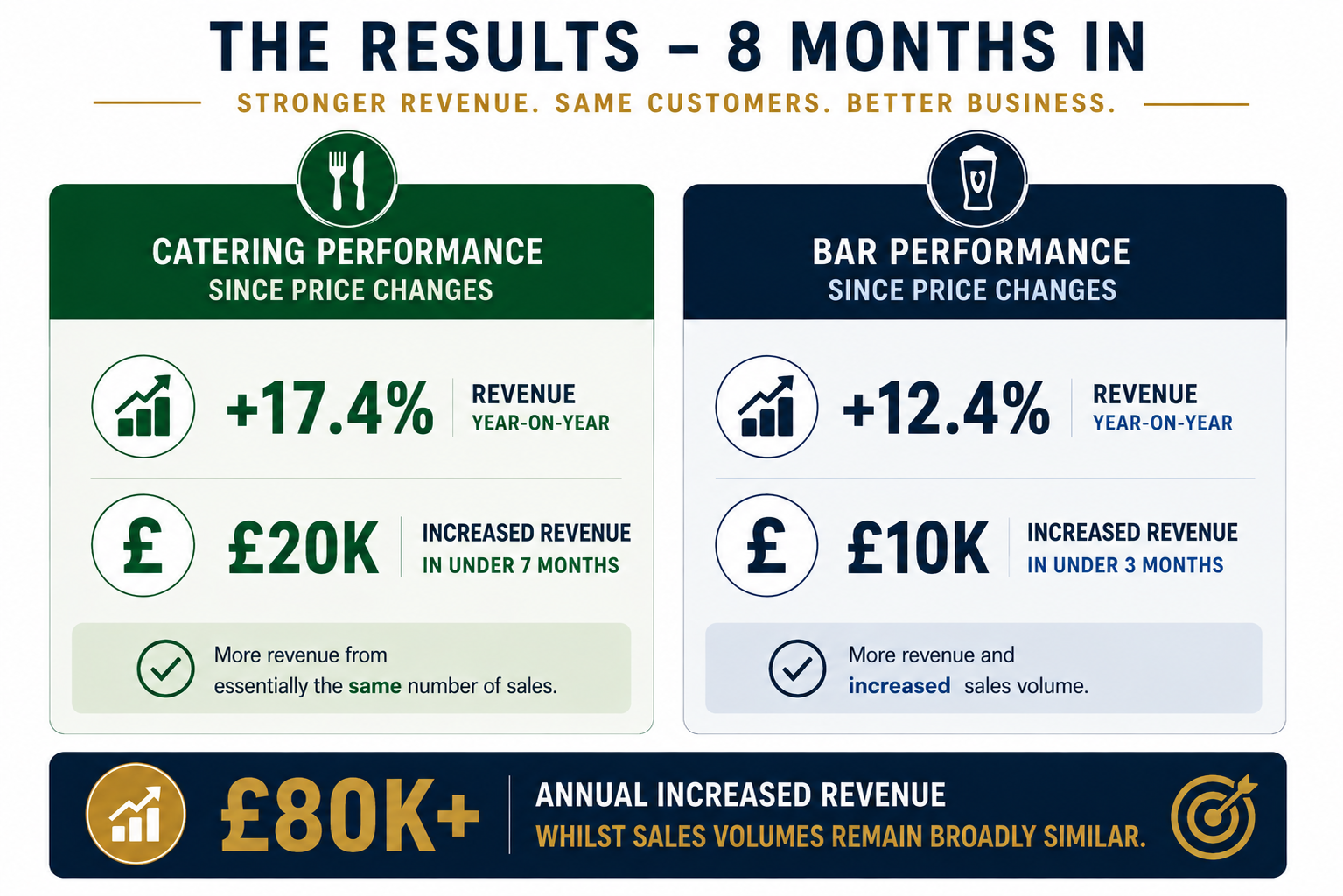
An operation that lost approximately £100,000 is now operating around break-even.
And importantly, that hasn't simply been achieved by cutting costs.
The concern that commercially realistic pricing would drive customers away simply hasn't materialised.
The Club is generating considerably more value from essentially the same underlying business.
What Happens Next?
The first eight months have been about fixing the foundations.
The next six months are about embedding them and optimising them.
Labour productivity. Stock management. Waste. Menu engineering. Supplier performance. Average spend. Upselling. Event profitability. Coffee sales. Secondary revenue streams. Service efficiency.
The hundreds of smaller improvements that turn a stable operation into a highly efficient one.
Phase One was about stopping a £100,000 loss.
Phase Two is about embedding those foundations and focusing on the granular improvements that drive efficiency and reveal what the operation is truly capable of.